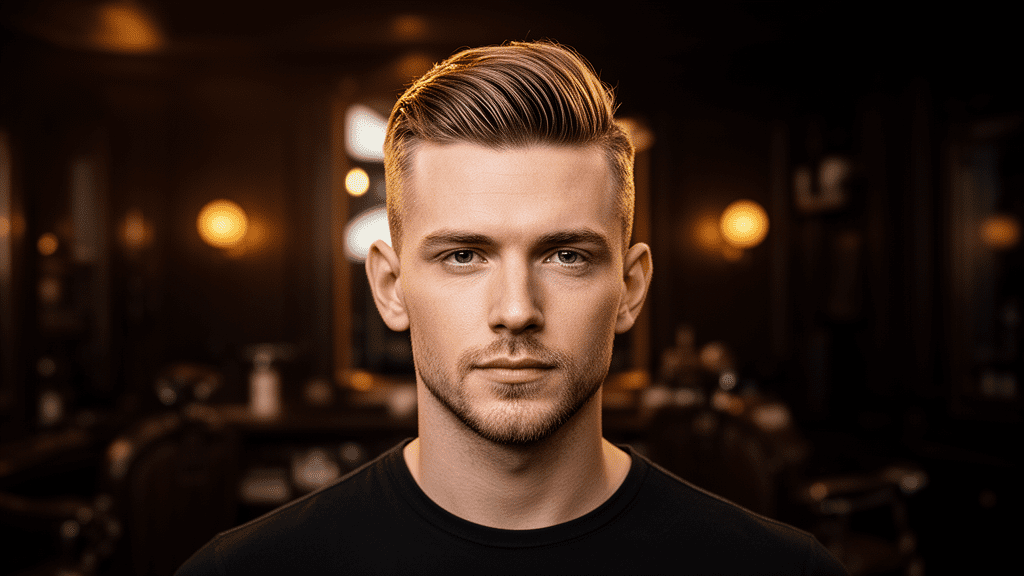
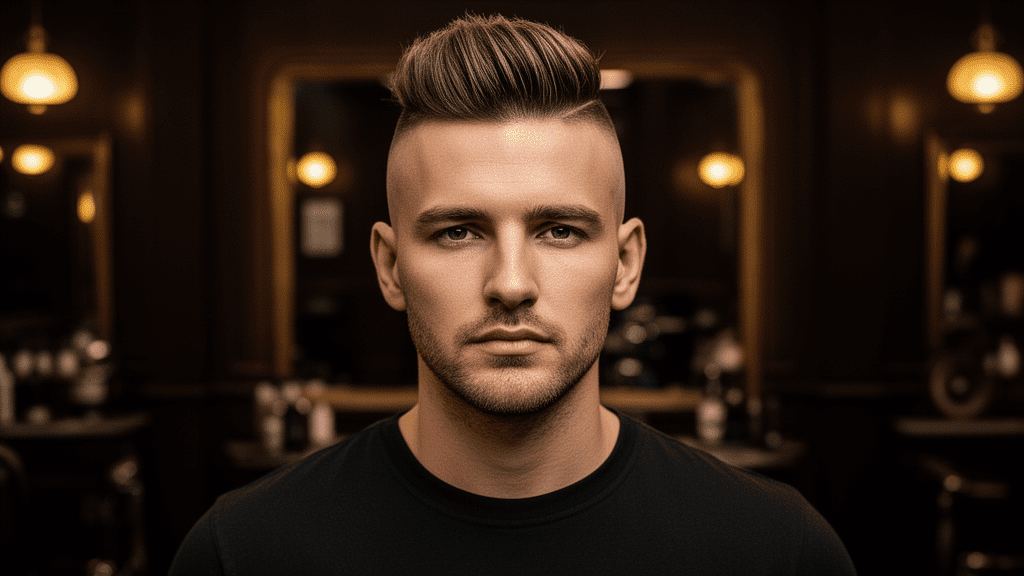
The Fade with Quiff is a prominent men’s hairstyle characterized by its distinct combination of short, precisely tapered or shaved sides and back, seamlessly transitioning into a longer, voluminous top section. This style has gained significant popularity from the early 2010s throughout the 2020s, establishing itself as a go-to choice for men globally. It represents an evolution of classic quiff styles, benefiting from the widespread adoption of fades and underscoring a contemporary trend towards combining neat, controlled sides with dynamic, styled tops. It is ideal for individuals seeking a stylish, modern haircut that offers both sharp precision and expressive volume, suitable for various occasions and personal expressions.
A Cut Through Time: The Genesis of the Fade with Quiff
The foundational elements of the Fade with Quiff, the fade and the quiff, each possess their own extensive historical trajectories. The fade, a technique involving the gradual shortening of hair from longer at the top to very short or shaven at the neckline and temples, draws its origins from military haircuts and 1920s styles, evolving through diverse subcultures and fashion movements. The quiff, characterized by its substantial, lifted mass of hair on the crown, saw considerable prominence during the 1950s and 1960s, experiencing resurgence in subsequent decades. The convergence of these two distinct styles into the modern Fade with Quiff solidified its status as a contemporary classic during the 2010s, propelled by widespread adoption among public figures and significant influence from digital media. This fusion embodies a modern approach to grooming, marrying traditional precision with a distinctly contemporary aesthetic.
Deconstructing the Style: Components of the Fade with Quiff
The Fade with Quiff is defined by its inherent high-contrast design. It features a meticulously executed fade on the sides and back, which can range from a low, mid, or high fade to a bald fade, depending on individual preference and the barber’s artistry. This fade progressively shortens the hair, creating a clean and sharp perimeter. The transition from the short sides leads into a longer, often voluminous quiff on top. This upper section is typically styled to sweep upwards and backward, frequently incorporating texture and height. The exact interpretation of the fade component can vary, influencing the overall profile of the haircut. Understanding the nuances of fades and undercuts is key to appreciating this versatile style.
Consulting Your Barber for the Fade with Quiff
Achieving the desired Fade with Quiff begins with clear communication with your barber. Instead of general descriptions, it is advisable to provide specific details and, ideally, visual references. Clearly articulate the desired fade level (e.g., low, mid, high, skin fade) and the precise length and texture preferred for the quiff. For instance, a request might specify a mid-skin fade with approximately three to four inches of hair on top, styled into a textured quiff with a natural lift. A knowledgeable barber will offer guidance and suggestions tailored to your hair type, growth pattern, and facial structure, ensuring the cut complements your features effectively.
Variations of the Fade with Quiff
The adaptability of the Fade with Quiff allows for numerous stylistic interpretations:
Textured Quiff
This iteration features a quiff styled with a focus on natural hair texture, often enhanced with a matte finish. The result is a less formal, more rugged appearance.
Slicked-Back Quiff
For a refined and polished aesthetic, the quiff is styled smoothly backward. This variation exudes sophistication and can be reminiscent of a pompadour with its swept-back volume.
Curly Quiff
Individuals with naturally curly or wavy hair can effectively adopt this style. The fade creates a neat contrast to the inherent volume and movement of the curls on top, offering a distinctive look.
Undercut Quiff
This variation involves a more pronounced separation between the sides and the quiff. The undercut establishes a sharp, defined line, accentuating the volume and presence of the longer top section.
Suitability and Lifestyle Considerations
The Fade with Quiff is remarkably versatile, making it suitable for a broad spectrum of individuals. It aligns well with a contemporary lifestyle, offering a balanced combination of sharp precision and dynamic volume.
- Hair Length: The style typically requires short to medium-length hair on the sides and top. For the quiff to be effective, at least a few inches of hair are necessary on the crown.
- Hair Type and Texture: This haircut performs well across straight, wavy, and curly hair types. While thicker hair generally offers better hold for the quiff, all textures can be accommodated. Thinning hair may benefit from a slightly shorter quiff to maintain a fuller appearance.
- Face Shape: The Fade with Quiff tends to flatter most face shapes. The tapering of the fade can visually slim a rounder face, while the height of the quiff can add balance to a longer face.
- Lifestyle Compatibility: This style is adaptable for various settings, transitioning seamlessly from professional environments to casual outings. Its contemporary edge makes it a favored choice for those who appreciate modern trends infused with classic elements.
Maintaining the Fade with Quiff
Optimal maintenance is crucial for preserving the integrity and aesthetic of the Fade with Quiff. Regular trims, ideally every three to four weeks, are recommended to uphold the sharpness of the fade and the defined shape of the quiff. The frequency of washing should be tailored to individual hair type, typically two to three times per week. Air drying is often preferred, though a hairdryer on a low-heat setting can be utilized for quicker styling.
Conclusion
The Fade with Quiff represents a sophisticated and adaptable men’s haircut. It combines the clean lines of a contemporary fade with the distinguished volume of a quiff, creating a look that is both modern and enduring. Its versatility allows for personalization, making it a compelling choice for those seeking a sharp, expressive style that embodies a refined yet dynamic aesthetic.