Introduction
The Undercut stands as a defining hairstyle of contemporary grooming, characterized by its sharp contrast and adaptable nature. This distinctive cut emerged with significant popularity in the late 2000s and has maintained its relevance throughout the 2010s and 2020s, solidifying its place as a versatile modern hair trend for various individuals. Its appeal lies in its ability to make a strong visual statement, adapting seamlessly from casual environments to more formal, yet still bold, settings.
Historically, variations of the Undercut have been present for decades, but its current iteration gained widespread acclaim, particularly among younger generations. It is a style that conveys confidence and a contemporary aesthetic, making it suitable for those who appreciate a precise yet expressive look.
Understanding the Undercut
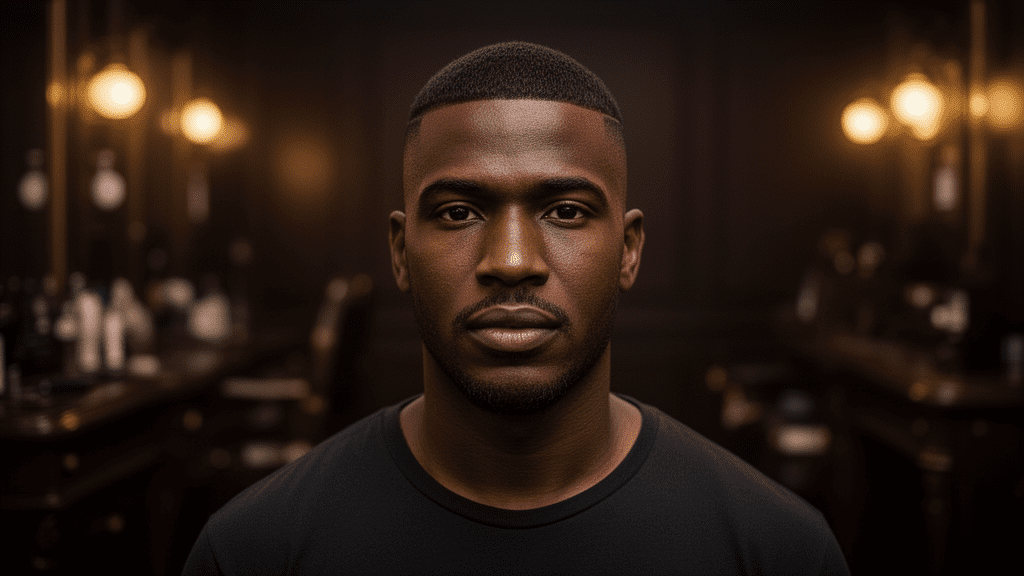
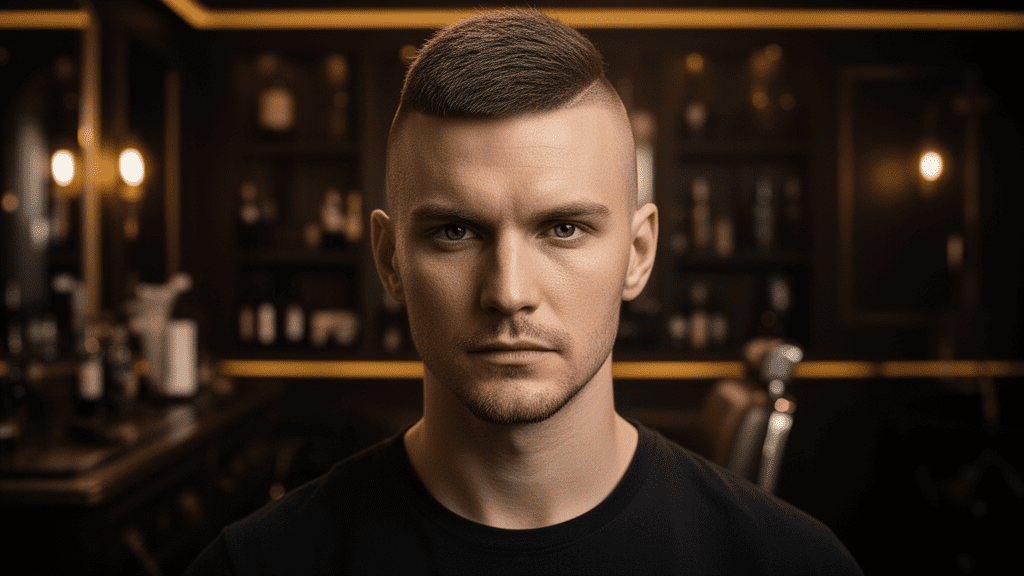
At its essence, the Undercut is defined by a clear distinction in hair length. The hair on the sides and back of the head is cut significantly shorter, often to a uniform length with clippers, or sometimes with a subtle taper. In contrast, the hair on the top of the head is left considerably longer. This creates a stark, dramatic line of separation rather than a gradual blend, which is a key characteristic of the style. This contrast is what gives the Undercut its bold and recognizable silhouette.
Often referred to as a Disconnected Undercut or a style featuring shaved sides, the core principle remains consistent: a definitive separation between lengths. Unlike a traditional fade, which offers a smooth transition, the Undercut’s distinct break is intentional and central to its aesthetic. This approach allows for creative styling on the longer top section, while maintaining clean, compact sides.
Styling and Variations
The inherent versatility of the Undercut allows for numerous styling possibilities, catering to diverse preferences and hair types. The longer top section can be styled in various ways, including slicked back, swept to the side, worn as a voluminous quiff, or given a textured, messy finish. This adaptability is one reason for its enduring appeal, as it permits individuals to personalize the look while retaining the defining contrast.
Variations can also involve modifying the length of the shorter sides, incorporating a hard part for added definition, or exploring artistic shaved designs. For those looking to explore specific placements, an option like the nape undercut offers a more subtle yet equally distinctive approach, often hidden beneath longer hair.
Suitability and Lifestyle
The Undercut is a haircut that appeals to a wide range of individuals, yet certain characteristics make it particularly effective. It is generally well-suited for various face shapes, including oval, square, and heart-shaped, as the volume on top can help balance proportions. For individuals with rounder faces, careful consideration of top volume is essential to avoid accentuating the face’s roundness.
In terms of hair characteristics, the Undercut works effectively with straight, wavy, and even curly hair, though styling methods will vary accordingly. Hair density from fine to thick can accommodate the style, with thicker hair often requiring more internal layering or texturizing to manage bulk. The Undercut is typically considered a moderate to high-maintenance style, as it requires consistent styling to achieve its desired look and regular visits to a barber every few weeks to maintain the sharp lines and short sides.
This style aligns with a lifestyle that embraces a bold, confident, and modern aesthetic. It is ideal for those who are comfortable with making a statement and are willing to dedicate time to daily grooming. As a category, it often falls under fades and undercuts, signifying its placement among contemporary, precision-oriented barbering techniques.
Maintaining the Undercut
Preserving the sharp definition and overall aesthetic of an Undercut requires attention to maintenance. Due to the rapid growth of hair, particularly on the clipped sides, frequent barber visits are necessary. Typically, re-trims every two to four weeks are recommended to keep the short sections crisp and the disconnection pronounced. Regular shaping ensures the longevity of the style’s intended structure.
Styling products are integral to achieving and holding the desired look for the longer top section. Pomades, waxes, clays, or gels can be used depending on whether a slick, textured, or voluminous finish is preferred. Experimentation with different products and application techniques is often required to find the optimal routine for individual hair type and desired outcome. Consistent washing and conditioning, without over-processing, contribute to overall hair health and manageability, which are vital for maintaining any styled haircut.