
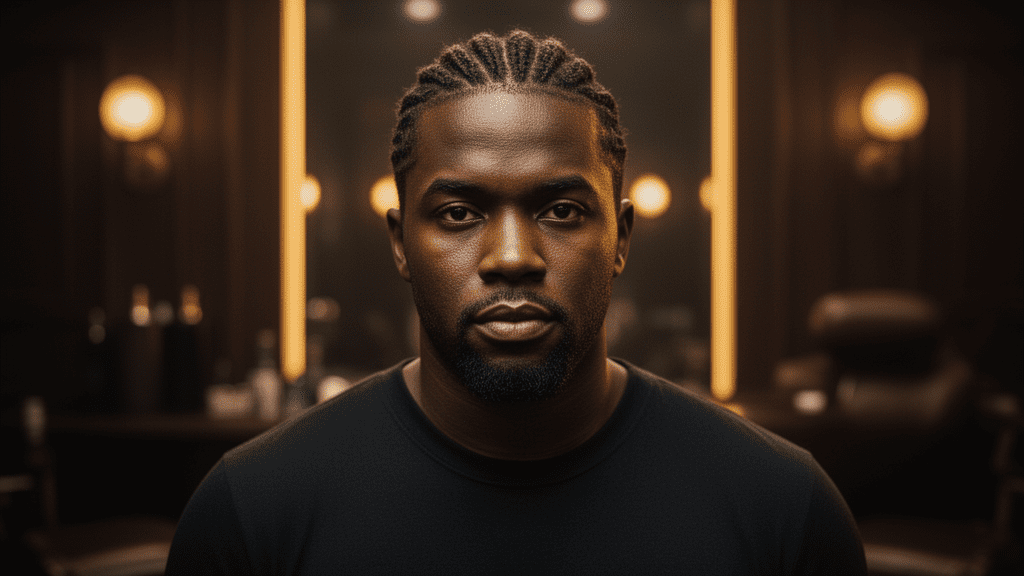
Introduction
Cornrows represent an intricate and historically significant braiding technique, characterized by continuous, raised rows braided closely to the scalp. Far from a fleeting trend, this style boasts an ancient lineage with continuous cultural relevance. Originating millennia ago, cornrows have continually evolved, adapting to contemporary aesthetics while retaining their foundational structure and purpose as a versatile and protective hairstyle. Their enduring appeal is evident in their global resurgence and presence in modern fashion, athletics, and music, solidifying their status as an iconic and highly adaptable choice.
Historical and Cultural Significance
More than merely a hairstyle, cornrows are a profound cultural expression, with roots deeply embedded in various African societies. Depictions of similar styles appear in ancient Egyptian art, highlighting their venerable age. Historically, cornrows have served as indicators of status, age, identity, and even coded messages within communities, with specific patterns conveying unique meanings. From historical African communities to their contemporary interpretation worldwide, cornrows have consistently demonstrated their staying power and capacity for adaptation, proving to be a true testament to enduring artistry and heritage.
Defining Cornrows
Cornrows are distinctive in their application: tight, three-strand braids that are formed by braiding hair underhand or overhand very close to the scalp, resulting in a raised, linear pattern. Unlike looser plaits, cornrows adhere firmly to the head, creating a sculpted effect. While variations in size and pattern exist, the defining characteristic is the continuous nature of the braid from root to tip, with no loose hair within the braided section itself. In certain regions, this style is also known as “canerows,” a nomenclature reflecting the similar appearance to rows in a cane field.
The Consultation: Achieving Your Desired Look
For individuals considering cornrows, a thorough consultation with a skilled barber or stylist is paramount. It is advisable to bring reference images detailing the desired braid size, pattern (e.g., straight-back, diagonal, geometric), and overall length. Clear communication regarding specific preferences, such as integrating a fade or maintaining natural edges, ensures the professional understands the client’s vision. A knowledgeable barber will offer guidance based on hair type, density, and facial structure to achieve a harmonious and personalized result.
Exploring Cornrow Variations
The inherent versatility of cornrows allows for a wide array of stylistic interpretations. Braids can range from fine and intricate to thick and bold, influencing the overall aesthetic. The inclusion of hair extensions, often referred to as feed-in cornrows, allows for added length, volume, or the incorporation of diverse colors, seamlessly integrating with natural hair. This technique also extends to combining cornrows with other braiding styles, such as Box Braids or even elements from a French Braid for a unique hybrid design. The potential for creative expression within this style is extensive.
Suitability and Lifestyle
Cornrows are a highly adaptable style, suitable for a broad spectrum of individuals and lifestyles. As a protective hairstyle, they are particularly beneficial for maintaining hair health and manageability over extended periods. Their low daily maintenance makes them an excellent choice for active individuals or those with busy schedules. The structured nature of cornrows can complement various face shapes, with customizable patterns that can visually lengthen a rounder face or soften angular features. While suitable for most hair textures and densities, from straight to kinky, and medium to long lengths, a professional consultation is crucial for those with very short or thinning hair. Culturally, cornrows continue to hold profound significance, particularly within African and diaspora communities, serving as a powerful link to heritage and identity. This style falls under both Men’s Hairstyles and Unisex Hairstyles, highlighting its broad appeal.
Practical Care and Maintenance
To preserve the integrity and appearance of cornrows, a consistent care regimen is essential. Regular scalp cleansing, typically every 2-3 weeks, using a gentle, residue-free cleanser, is recommended. Care should be taken to avoid aggressive scrubbing, focusing instead on thorough rinsing. Allowing the braids to air dry or using a low-heat setting on a hairdryer helps prevent moisture buildup. Light, non-greasy moisturizing sprays or oils can be applied sparingly to the scalp to maintain hydration without causing excessive product accumulation. Periodic retouches, generally every 4 to 6 weeks, are necessary to refresh the perimeter and maintain the style’s neatness. A skilled barber or stylist can offer specific product recommendations tailored to individual hair and scalp needs.
Cornrows in Popular Culture
Cornrows have transcended their traditional origins to become a prominent feature in global popular culture. From celebrated athletes and musicians to influential figures in film and television, the style has been embraced across diverse fields. Its consistent presence in media and fashion campaigns underscores its universal appeal and adaptability, establishing cornrows as a recognizable and enduring symbol of style and individuality across generations and genres.
Frequently Asked Questions
Q: How long does it typically take to get cornrows?
A: The duration varies depending on the complexity of the chosen pattern, the number of braids, and the client’s hair length and density. A full head of cornrows can take several hours to complete.
Q: How often should cornrows be washed?
A: It is generally advised to cleanse the scalp every 2 to 3 weeks. Focus on gentle application and thorough rinsing to maintain scalp health and braid cleanliness.
Q: Is it safe to sleep with cornrows?
A: Yes, sleeping with cornrows is common. To protect the style and prevent frizz, it is recommended to wear a satin scarf or bonnet at night.
Q: What is the typical lifespan of a cornrow style?
A: Cornrows typically last between 4 to 6 weeks. Beyond this period, the hair’s natural growth may cause the braids to loosen, necessitating either removal or a professional re-braiding.
Q: Can cornrows be further styled once installed?
A: While cornrows are a complete style in themselves, they can be subtly accessorized with beads or hair jewelry. Their tight adherence to the scalp limits extensive restyling.
Q: Do cornrows cause hair damage?
A: When installed and maintained correctly, cornrows serve as a protective style and are generally not damaging. However, braids that are too tight or excessive tension during braiding can lead to traction alopecia or scalp irritation. It is crucial to communicate any discomfort during the braiding process to your barber or stylist.