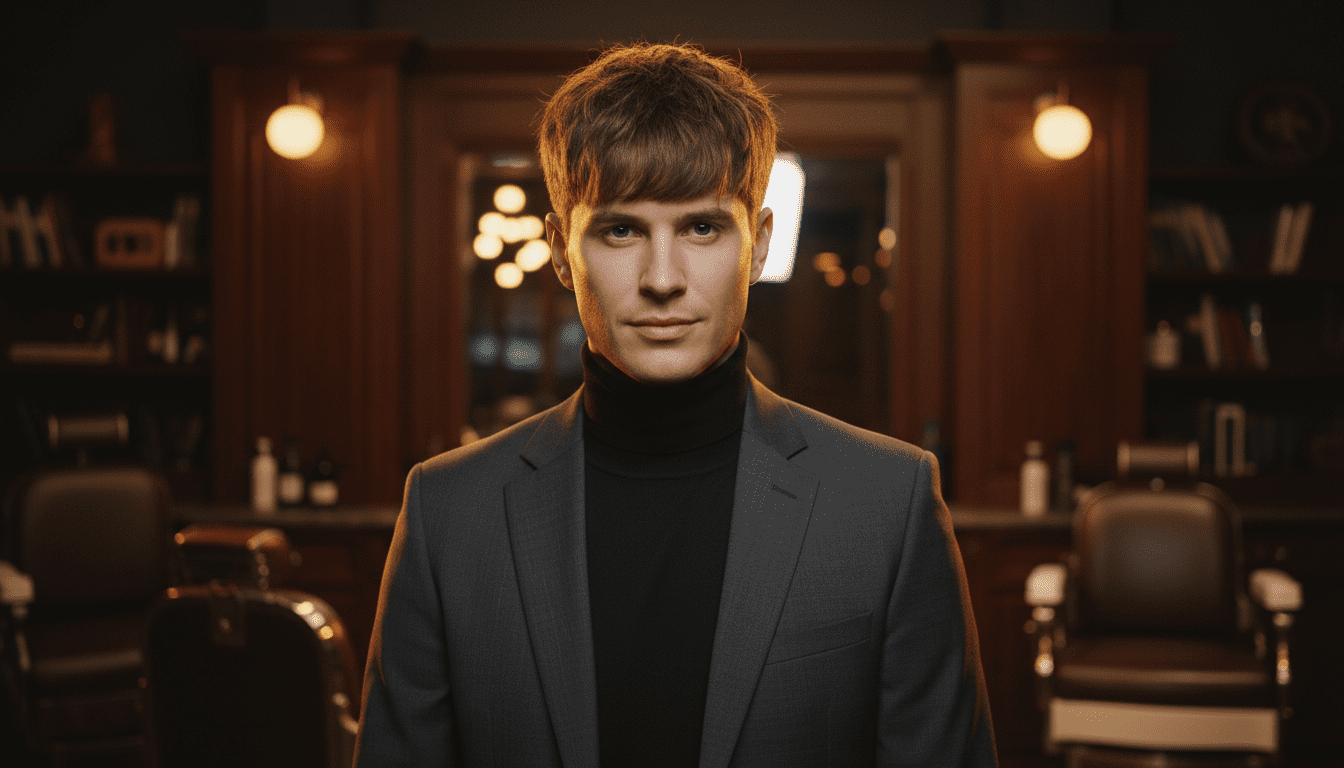
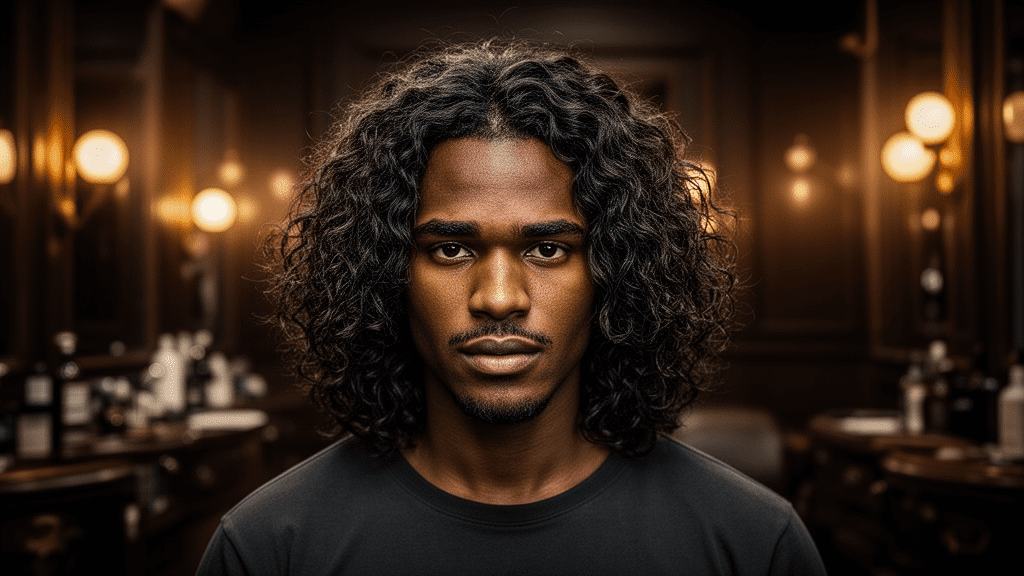
The Loose Waves hairstyle represents a contemporary approach to hair design, seamlessly integrating precise barbering with organic movement. It is characterized by sharply tapered or faded sides and back, complemented by a longer top section styled into natural, flowing waves. This blend creates a balanced aesthetic that is both refined and relaxed.
Popularity and Contemporary Relevance
The Loose Waves style has experienced a significant surge in popularity from the mid-2010s and continues its prominence throughout the 2020s. This enduring appeal is attributed to its versatility, modern aesthetic, and its alignment with the broader trend of integrating natural hair textures with refined barbering techniques. It is a favored choice for individuals seeking a stylish yet adaptable appearance.
Historical Context
The foundational elements of the Loose Waves style, namely the fade and textured waves, possess a rich history. The fade, a cornerstone of classic barbering, dates back decades, providing a clean and structured base. Concurrently, the embrace of natural, flowing waves became prominent through various cultural movements, from beach aesthetics to the rebellious styles of mid-20th-century music. The contemporary Loose Waves hairstyle represents an evolution of these distinct components, refined into a versatile and accessible look suited for modern sensibilities. It exemplifies the enduring capacity of classic techniques to be reinterpreted for current trends.
Defining the Loose Waves Hairstyle
At its core, the Loose Waves hairstyle unifies the precision of a fade with the organic texture of wavy hair. The sides and back are meticulously tapered or shaved, with length progressively increasing towards the crown. The paramount feature is the top section, which is specifically cut and styled to accentuate or create loose, natural-looking waves, eschewing overly rigid or defined curl patterns. The deliberate transition from the faded perimeter to the longer, moving top is crucial for achieving the balanced and cohesive aesthetic characteristic of this style.
Consultation with Your Barber
Effective communication with your barber is essential for achieving the desired Loose Waves aesthetic. While the name itself provides a general direction, it is advisable to bring visual references to illustrate your specific preference for the fade’s height and transition, as well as the desired looseness and softness of the waves. Discussing your natural hair texture and growth patterns will enable the barber to tailor the cut and styling approach to best suit your individual characteristics. A skilled barber will engage in a thorough consultation to ensure a clear understanding of your vision and offer professional insights.
Technical Execution: Fades and Wave Enhancement
The creation of the Loose Waves hairstyle involves two primary technical aspects. The fade on the sides and back is executed using clippers, with the barber skillfully graduating hair length from the shortest point to the desired length at the top. For the upper section, cutting techniques such as point cutting or the judicious use of texturizing shears are often employed to reduce bulk, encourage natural wave formation, and impart a sense of effortless movement, preventing the waves from appearing overly uniform or structured.
Stylistic Variations
The inherent versatility of the Loose Waves hairstyle allows for numerous adaptations to suit individual preferences. The height of the fade, whether high, mid, or low, can dramatically alter the overall impression, ranging from a more contemporary, defined aesthetic to a softer, understated presentation. Adjustments to the length and layering of the top section dictate the prominence and volume of the waves. Further personalization can be achieved through elements such as a defined part or a textured fringe. For those with naturally curly hair, the style can be adapted to enhance and define existing curl patterns, creating a distinctively textured variation, particularly suitable for curls and textured hair.
Suitability and Lifestyle Alignment
The Loose Waves hairstyle is ideally suited for individuals who prioritize a stylish, contemporary aesthetic that harmonizes sharp lines with natural texture and movement. It is an excellent choice for those with natural waves or curls, offering a low-maintenance yet striking appearance that transitions seamlessly between active and social environments. The style resonates with those who appreciate and wish to emphasize their natural hair texture, embodying an effortless yet refined sensibility.
Face Shape Harmonization
This versatile haircut can complement a wide array of face shapes. The graduated length of the fade provides structural definition, which can assist in balancing broader facial contours. Conversely, the volume and texture inherent in the loose waves on top can introduce width and softness, effectively harmonizing with longer or more angular facial structures. This adaptability makes it a broadly flattering option.
Hair Characteristics
To achieve the distinct wave pattern, a minimum top length of several inches is typically required, with the precise length influenced by the desired volume and amplitude of the waves. While adaptable to various hair textures, individuals with thicker hair may find it naturally holds waves with greater ease. The style is generally suitable for most hair types; however, clients experiencing significant hair thinning or specific scalp conditions should consult with their barber or a dermatologist to ascertain the most appropriate styling approaches to avoid undue stress on the hair or scalp.
Expert Insights for Longevity and Style
Comprehensive Visual Assessment
It is beneficial to assess the haircut from all angles to fully appreciate how the fade integrates with the waves and how the style frames the face. This holistic view ensures satisfaction with the overall aesthetic.
Age and Versatility
This hairstyle transcends specific age demographics. With appropriate styling and attention to detail, the Loose Waves can be adopted by individuals across various life stages, presenting a sophisticated and contemporary look regardless of age.
The Importance of a Skilled Barber
Selecting a barber proficient in both fade techniques and textured styling is paramount for achieving the optimal Loose Waves result. A consultation prior to the service can help confirm their understanding of the desired outcome.
Transitioning from the Style
Should there be a desire to transition from the Loose Waves, the process is straightforward. Allowing the top section to grow out while gradually adjusting the fade’s length offers a smooth transition into alternative longer styles or textured cuts.
Cultural Impact
The Loose Waves hairstyle has frequently appeared across various cultural platforms, from prominent figures in entertainment to mainstream fashion. Its adaptable and stylish nature has solidified its status as a favored choice, demonstrating its capacity to convey both sophistication and an approachable aesthetic in diverse public contexts.
Maintenance and Care
To preserve the integrity and appearance of the Loose Waves, a consistent maintenance regimen is recommended. Washing hair every 2-3 days using gentle cleansing products can help maintain the waves without over-stripping natural oils. Air drying or using a diffuser attachment on a hair dryer is often beneficial for enhancing natural wave patterns. Regular trims, ideally every 4-6 weeks, are crucial for maintaining the sharp lines of the fade and preventing the accumulation of split ends, ensuring the style retains its refined structure.
Frequently Asked Questions
Q: Can this haircut be achieved on finer hair? A: Yes, it is possible, though additional techniques or product application might be necessary to enhance volume and hold. Consultation with a barber is advised.
Q: What is the typical maintenance level for this style? A: This style is often considered relatively low to moderate maintenance. While some individuals with natural waves may find it a “wash-and-go” style, others may choose to incorporate styling techniques to refine the look.
Q: How frequently should I schedule trims? A: To maintain the sharpness of the fade and the overall shape, trims are generally recommended every 4-6 weeks.
Q: Is it possible to achieve this style without naturally wavy hair? A: A skilled barber can employ specific cutting and styling methods to create the illusion of loose waves, even on hair that is naturally straighter.
Q: Does this style suit all face shapes? A: Its adaptable nature allows for modifications in fade height and wave length, making it a versatile option that can be customized to flatter most face shapes.
Conclusion
The Loose Waves hairstyle stands as a testament to contemporary hair artistry, offering a sophisticated blend of precision and natural texture. Its broad appeal and adaptability ensure its continued relevance as a prominent and stylish choice.