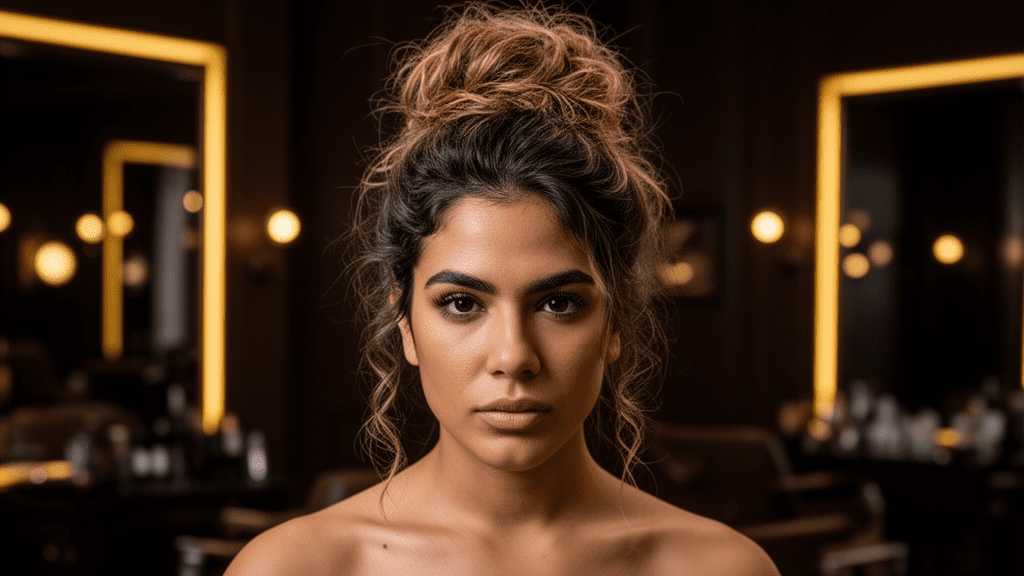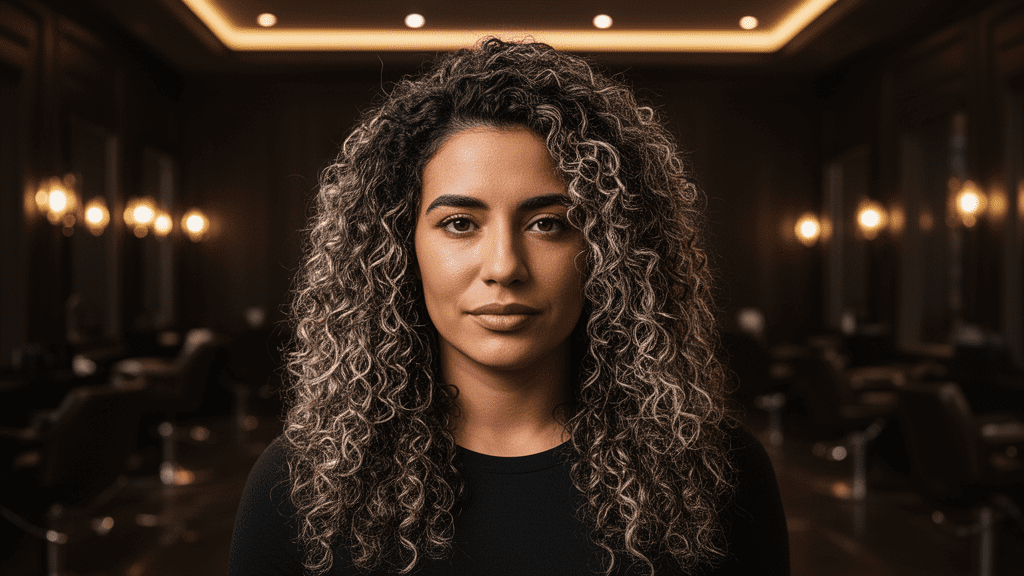
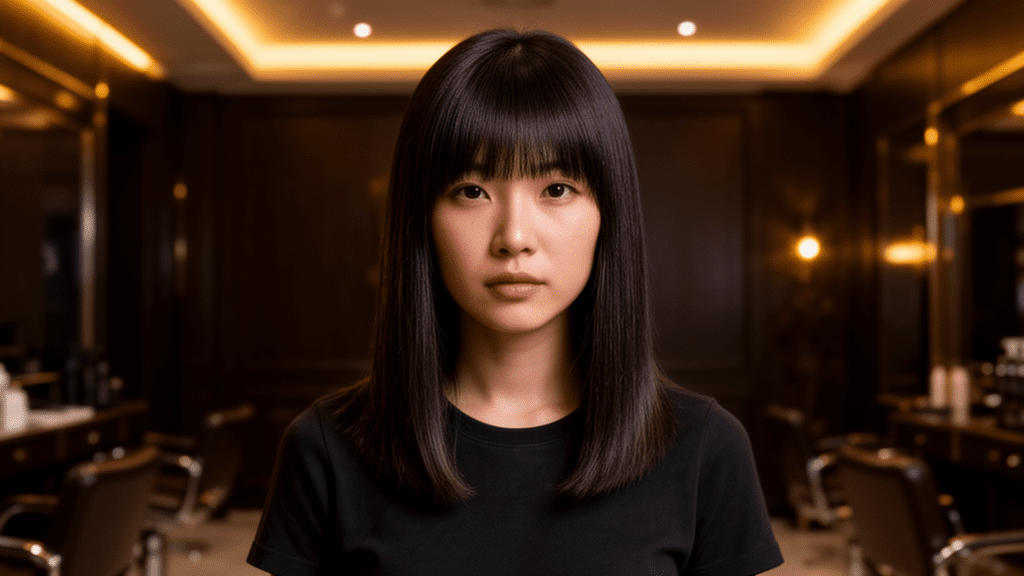
A Straight Perm is a chemical hair treatment designed to permanently alter the hair’s natural texture, transforming curly, wavy, or kinky hair into a sleek, straight, and smooth form. This process involves the strategic breaking and then re-bonding of the hair’s disulfide bonds. It became particularly popular from the 1990s through the 2000s, especially within Asian markets, where it was highly sought after as an effective method for achieving pin-straight hair. The technique continues to be a viable option for those desiring lasting straightness.
Historically, the foundational principles of chemical hair straightening emerged in the early 20th century. Over decades, advancements in chemistry and technique have led to gentler, more efficient, and enduring results, moving far beyond the rudimentary methods of the past. Contemporary straight perm applications represent the culmination of this refinement, allowing stylists to create precise, customized outcomes for their clients.
Understanding the Straight Perm
Also recognized as Japanese straightening or thermal reconditioning, a straight perm is a chemical service formulated to permanently straighten naturally curly or wavy hair. The objective extends beyond merely altering the hair’s appearance; it involves fundamentally restructuring the hair’s internal bonds to achieve a consistently sleek and smooth effect.
The natural curl pattern of hair is dictated by disulfide bonds present within each strand. The straight perm process systematically breaks these bonds, and then, using heat and a neutralizer, reforms them into a straight configuration. This intricate procedure demands significant expertise and precision from the stylist.
While occasionally referred to as a “chemical relaxer,” it is important to note that chemical relaxers typically loosen curl patterns rather than achieving the complete straightening characteristic of a straight perm. Professionals often refer to this treatment as “thermal reconditioning” or “Japanese Straightening” to emphasize its specific methodology and results.
Consulting Your Stylist for a Straight Perm
Effective communication with your stylist is essential when considering a straight perm. To ensure your desired outcome is clearly understood, consider the following points:
- Visual References: Provide clear photographs that illustrate the precise level of straightness and overall aesthetic you wish to achieve.
- Clarify Hair Goals: Articulate whether you desire pin-straight hair or a more softened, straightened texture with some body.
- Hair History Disclosure: Inform your stylist about any previous chemical treatments, such as coloring or other perms, as this information is crucial for selecting the appropriate solutions and adjusting the process.
- Process and Product Inquiry: Do not hesitate to ask questions regarding the specific chemicals and techniques your stylist intends to use. A knowledgeable stylist will provide a detailed explanation.
- Aftercare and Appointment Duration: Confirm the anticipated duration of the appointment and inquire about recommended aftercare practices to maintain the longevity and health of your straightened hair.
The procedure typically involves applying a chemical solution to break the hair’s bonds, followed by a rinse. The hair is then meticulously straightened with a flat iron, and a neutralizer is applied to reform the bonds in their new, straight alignment. The selection of chemicals, heat settings, and processing times are all critical factors that influence the final result.
Straight Perm Variations
While the fundamental principle of a straight perm remains consistent, there are adaptable approaches that allow for personalized outcomes:
- Volume Straight Perm: This variation focuses on straightening the hair while deliberately preserving a degree of natural volume at the roots, thereby preventing an excessively flat appearance.
- Root Perm with Straight Ends: Suitable for individuals who primarily wish to address new growth at the roots while maintaining some existing texture or style at the ends.
- Partial Straight Perm: This option targets specific sections of the hair, such as frizzy areas around the face or neck, while leaving other parts in their natural state.
These adaptations enable the straight perm to be tailored to individual hair needs and aesthetic preferences.
Straight Perm Compared to Other Treatments
Understanding how the straight perm differs from other hair treatments is key to making an informed decision:
- Relaxer: Chemical relaxers utilize agents to break down hair bonds, but their primary aim is to loosen and soften curls, typically not to achieve the complete straightening associated with a straight perm.
- Keratin Treatment: Keratin treatments, such as Brazilian Blowouts, involve coating the hair shaft with keratin protein. This process temporarily smooths frizz and straightens hair, with effects generally lasting several months.
- Hair Rebonding: This term is often used interchangeably with Japanese straightening due to the similar chemical and thermal processes involved in restructuring hair to achieve a pin-straight finish. Both are a type of permanent wave that changes hair structure.
Suitability for the Straight Perm
The straight perm is ideal for individuals with naturally curly, wavy, or kinky hair who desire long-lasting, pin-straight results with minimal daily styling effort. It suits those seeking a highly polished, sleek look and who are committed to the necessary aftercare and regular salon touch-ups.
Hair Specifics:
- Hair Length (Starting): A minimum of 4-6 inches of hair is generally required for the treatment to be effectively applied.
- Hair Type: Most effective on wavy, curly, or coily hair types.
- Hair Texture: Can be performed on fine, medium, or thick hair, though the specific chemical formulation may need adjustment based on texture.
- Hair Health: It is imperative that hair is in good health and not severely damaged or excessively processed prior to a straight perm. The treatment may not be advisable for thinning hair due to potential breakage.
Culturally, the straight perm gained significant prominence in East Asian countries, particularly Japan and Korea, where sleek, straight hair is frequently associated with elegance and refinement.
Essential Considerations for a Straight Perm
Prior to committing to a straight perm, clients should be aware of several essential points:
Heat Protection
Given that a straight perm inherently alters the hair’s structure, any subsequent heat styling should be approached with caution. The consistent use of a heat protectant is advisable when employing thermal tools to minimize additional stress on the hair.
Hair Health and Age
While age itself is not a barrier, the condition of mature hair, which can sometimes be more fragile, should be carefully considered. A thorough consultation with a skilled stylist is crucial to assess hair integrity and determine the most appropriate approach.
The Importance of Stylist Selection
Executing a straight perm is a complex process that demands a high level of skill and experience. It is not a procedure suitable for at-home application. Clients should seek a stylist with demonstrable expertise in chemical straightening. Requesting to see a stylist’s portfolio of before-and-after results and reviewing client testimonials are recommended steps.
Maintenance Products
To preserve the integrity and longevity of a straight perm, it is beneficial to use gentle cleansing and conditioning products. Specifically, formulations free of harsh sulfates are often recommended. Additionally, incorporating a quality hair serum can help maintain smoothness and hydration.
Maintenance and Longevity
To ensure your straight perm retains its pristine condition, adhere to the following maintenance guidelines:
- Washing Frequency: Limit washing to 2-3 times per week, utilizing sulfate-free shampoo and conditioner.
- Drying Methods: Air-drying is preferred. If blow-drying is necessary, use a low heat setting and apply a heat protectant.
- Retouch Schedules: Anticipate root touch-ups every 3-6 months, depending on individual hair growth rate.
Frequently Asked Questions (FAQs)
- Q: Can a straight perm cause hair damage?
- A: Any chemical treatment carries an inherent risk of damage. However, a proficient stylist employing high-quality products can significantly mitigate this risk. Adhering to proper aftercare is also paramount.
- Q: How long does the effect of a straight perm last?
- A: The hair that has been treated remains permanently straight. Regular root touch-ups will be necessary as new, untreated hair grows in.
- Q: Is it permissible to color hair after a straight perm?
- A: It is generally advised to wait at least two weeks post-treatment before coloring to prevent over-processing. A consultation with your stylist is recommended for optimal timing and product choices.
- Q: Can a straight perm be performed on damaged hair?
- A: It is not recommended. The priority should be to restore hair health before considering a straight perm.
- Q: What is the typical cost of a straight perm?
- A: Pricing varies based on geographical location, the stylist’s experience, and the client’s hair length and thickness. Costs generally range from $200 to $800.
- Q: Will a straight perm result in completely flat hair?
- A: Not necessarily. A skilled stylist can execute a straight perm that maintains a natural appearance with some volume and movement.