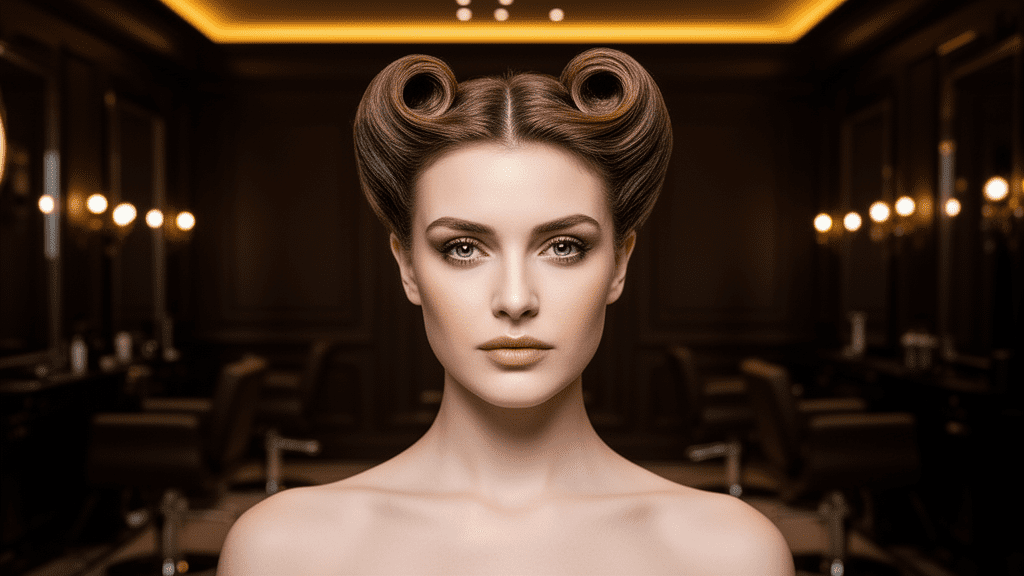
The Victory Rolls stand as an enduring emblem of mid-20th century glamour, an iconic hairstyle that transcends transient trends. Originating as a practical yet sophisticated solution for women during a transformative historical period, it has since become a cherished expression for those drawn to vintage aesthetics and a meticulously styled, distinctive look. While its peak popularity was undeniably in the 1940s, the style continues to enjoy resurgences within specific subcultures and high-fashion circles, making it a powerful statement for individuals embracing a retro personal style. A skilled stylist can recreate this historic look with precision and flair, offering a connection to an era of elegance and resilience.
Historical Significance and Cultural Impact
Emerging prominently during World War II, the Victory Roll was more than a mere hairstyle; it embodied resilience, optimism, and feminine strength. Women entered new societal roles, and fashion adapted to combine practicality with undeniable elegance. The popular narrative suggests the style’s name was inspired by the daring aerial maneuvers of fighter planes, reflecting the prevailing spirit of the era. Icons such as the glamorous pin-up models and silver screen actresses popularized the look, solidifying its place in cultural memory. This style became a visual shorthand for a confident, capable woman, widely adopted across the nation and contributing to its enduring legacy in retro-vintage styles.
Deconstructing the Victory Roll
At its core, a Victory Roll is a hairstyle characterized by sections of hair carefully rolled upwards and inwards, then secured to create voluminous, sculpted shapes. Typically, two symmetrical rolls frame the face, though variations with a single roll are also common. Achieving the classic Victory Roll necessitates significant volume at the front of the head, often built through backcombing, specific product application, and precise pinning. The hair must possess sufficient length, generally chin-length or longer, to form the distinctive barrel shape. The goal is a highly structured, polished aesthetic that sets it apart from more informal rolled or curled styles. The voluminous nature of this style is a key characteristic, defining its presence and form, and contributing to the overall grandeur of the look. Achieving this high volume is paramount for an authentic Victory Roll, making it a truly voluminous expression.
Consulting Your Stylist for Victory Rolls
To achieve an authentic Victory Roll, effective communication with your stylist is crucial. It is highly recommended to provide visual references to convey your desired outcome accurately. Articulate your preference for a sculpted, voluminous rolled style, specifying how you envision the rolls framing your face—whether two classic rolls or a singular, dramatic statement. Discuss your current hair length, as adequate length is fundamental for creating and securing the rolls. Your stylist can advise on realistic expectations and potential variations if your hair is shorter. Furthermore, inquire about styling products that offer strong hold, which are essential for maintaining the structure and longevity of the Victory Rolls. The foundation for this style often involves creating significant body, which might include specific texturizing techniques to ensure the hair holds its shape effectively.
Popular Variations of the Victory Roll
The inherent structure of the Victory Roll allows for several adaptable variations, providing versatility while retaining its iconic appeal:
- The Single Roll: This rendition features one prominent, larger roll, frequently positioned off-center. It offers a contemporary interpretation of the classic, often appearing slightly less formal.
- Half-Up Victory Rolls: In this style, the front sections of the hair are fashioned into Victory Rolls, while the remaining hair cascades freely. It is an excellent choice for those seeking vintage glamour without committing to a full updo.
- Braided Victory Rolls: Incorporating braids into the Victory Roll design adds textural depth and visual interest. A braid might serve as an accent around the base of the roll or be woven into its structure.
- The Faux Victory Roll: For individuals with shorter hair, a similar aesthetic can be achieved by teasing and shaping the hair to mimic the volume and silhouette of a true Victory Roll. While not technically a rolled section, it captures the essence of the style effectively.
Suitability for the Individual
The Victory Roll is a deliberate statement, requiring consideration of personal lifestyle and hair characteristics.
- Lifestyle: This is not a low-maintenance, wash-and-go hairstyle. It demands a commitment of time and effort for styling, making it suitable for those who appreciate dedicated grooming routines or reserve it for special occasions.
- Face Shape: The style typically complements oval, heart, and square face shapes by adding volume and width to the upper facial area. This can help to balance strong jawlines and soften more angular features.
- Personality: Individuals who are drawn to vintage fashion, distinct personal styles, or who enjoy making a bold statement will find the Victory Roll an ideal match. It conveys confidence, individuality, and a sense of timeless elegance.
- Hair Characteristics: Victory Rolls generally require medium to long hair, with at least chin-length hair being necessary. Longer hair facilitates more dramatic and voluminous rolls. The style is adaptable to straight, wavy, and even curly hair, though straighter textures may require additional teasing and product for optimal hold. Fine to medium hair textures are often easier to manipulate, while thicker hair may necessitate more intricate sectioning and pinning.
- Ethnic & Cultural Contexts: While not exclusive to any single ethnic group, Victory Rolls gained widespread popularity in 1940s American culture and remain a significant element within the rockabilly and pin-up subcultures.
Essential Knowledge for Victory Roll Wearers
Beyond the initial styling, understanding the nuances of the Victory Roll is key to successfully wearing this distinguished look.
The Confidence of the Style
Adopting Victory Rolls extends beyond hair arrangement; it is an embrace of an attitude. The style inherently projects confidence, flair, and unapologetic glamour. To wear Victory Rolls effectively is to embody the poise and distinctiveness they represent, reflecting the sophisticated aesthetic of a bygone era.
The Stylist’s Expertise
Not all stylists specialize in vintage hairstyles. To ensure a perfect Victory Roll, it is advisable to seek a stylist with demonstrated experience in historical or retro hair design. Their specialized knowledge and technique will be instrumental in achieving the desired precision and authentic aesthetic for your soft waves or rolled styles.
Victory Rolls in Popular Culture
The Victory Roll has appeared on numerous notable figures in popular culture, from the iconic pin-up models of the 1940s to contemporary celebrities like Gwen Stefani and Dita Von Teese. Its presence in media, such as on characters like Peggy Carter from Captain America, further solidifies its status as a recognized symbol of strength and glamour, consistently making a statement across various eras.
Maintenance and Longevity
Preserving the pristine appearance of Victory Rolls requires specific care practices. Infrequent washing is recommended to maintain the hair’s natural oils and styling integrity. When washing, opt for gentle, sulfate-free products. Air drying or using a diffuser on a low heat setting is preferable to safeguard the shape of the rolls. Regular trims are advisable to manage split ends and promote overall hair health, contributing to a consistently polished look. For those committed to maintaining this distinctive style, a clear understanding of its upkeep requirements is essential.