Introduction
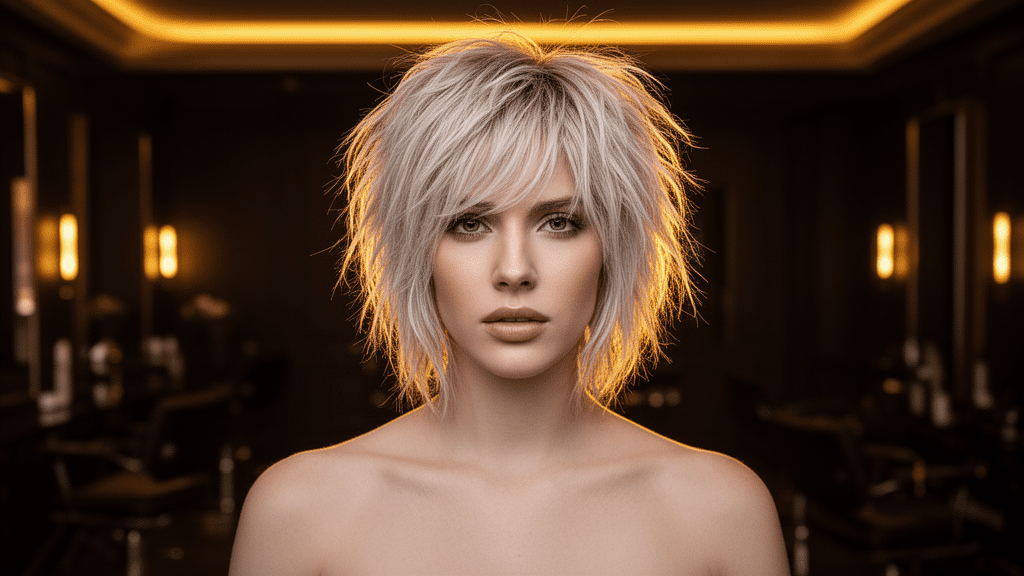
The Choppy Layers haircut is a contemporary and versatile style that has maintained significant popularity from the 2010s into the 2020s. It is recognized for its ability to add considerable volume and movement to the hair, offering a modern, textured aesthetic. This style is favored by individuals seeking a look that enhances natural hair type with a sophisticated, yet seemingly effortless, finish.
The Essence of Choppy Layers
Choppy layers are fundamentally a technique that involves cutting hair at varying lengths, often with distinct, rather than smoothly blended, transitions. This approach creates noticeable edges and a dynamic, textured effect throughout the hair. It is a modern interpretation of layered styles, updated to provide a deconstructed feel and contemporary appeal.
Historical Context
While specific origins are not definitively documented, the concept of textured, layered haircuts draws inspiration from several periods. Echoes of the shaggy styles prevalent in the 1970s, the expressive cuts of the 1980s, and elements from more recent subculture movements contribute to the current manifestation of choppy layers. This evolution reflects a blend of these influences, refined for contemporary relevance rather than a direct replication of past trends.
Understanding the Cut
The term \”choppy layers\” accurately describes a haircut characterized by multiple lengths of hair, cut at contrasting angles to produce a distinctively textured, piecey appearance. This technique prioritizes intentional unevenness over uniform lines, creating a tousled yet deliberate aesthetic. In certain styles, a subtle fade, typically a low or mid fade, may be integrated for added definition. Professional stylists may also refer to this as a \”textured layered cut\” or a \”disheveled style,\” emphasizing the goal of achieving a dynamic, deconstructed look.
Obtaining the Choppy Layers Hairstyle
To achieve this distinctive haircut, effective communication with your stylist is paramount:
- Visual References: Provide visual examples of choppy layers that align with your desired aesthetic. This aids in conveying preferences for length, texture, and any specific styling elements.
- Clear Communication: Articulate your expectations using terms such as \”textured,\” \”piecey,\” and \”layered.\” Specify desired hair length and the presence of any fade. If you have a preferred hair part, communicate this detail.
- Hair Characteristics Discussion: Inform your stylist about your hair type (straight, wavy, curly, coily) and density (fine, medium, thick). This information enables the stylist to tailor the cut to your hair’s natural characteristics.
- Professional Guidance: Trust in your stylist’s expertise. A skilled professional will adapt the technique to complement your individual hair type and facial structure, creating a flattering outcome.
Variations of Choppy Layers
The versatility of choppy layers allows for numerous adaptations, making it suitable for a wide range of personal styles:
- Long Choppy Layers: This variation maintains the signature textured appearance with greater length, typically at or below the shoulders.
- Short Choppy Layers: A more abbreviated and edgy version, ideal for individuals who prefer a bolder statement with minimal length.
- Choppy Layers with Undercut: This combines the textured top with a closely clipped or shaved section on the sides or back, creating a high-contrast aesthetic.
- Choppy Layers with Fringe: The addition of a fringe or bangs can frame the face, soften the overall silhouette, or introduce a distinct focal point.
Suitability of the Hairstyle
While choppy layers are highly adaptable, certain considerations can influence their suitability.
Lifestyle and Personality
This hairstyle is ideal for those seeking a highly layered, textured haircut that adds significant volume and dynamism. It appeals to individuals who desire a modern, edgy, and often low effort look that enhances their natural hair type, providing a stylish, “undone” aesthetic. It reflects a confident and dynamic approach to personal style and generally suits those who appreciate engaging in some degree of daily styling to maximize its textured effect.
Face Shape
Choppy layers can be adapted to flatter most face shapes. The strategic placement of layers and selection of length are key to balancing facial proportions. For example, longer layers can soften an angular jawline, while shorter, more voluminous layers can add width and definition to a narrower face. A skilled stylist can advise on the most complementary layering for your specific facial structure.
Hair Characteristics
This cut is effective on a broad spectrum of hair types and textures, encompassing straight, wavy, and thick hair. For very curly or coily hair, specific styling methods and products may be necessary to define texture and manage volume. Individuals with very fine or significantly thinning hair should consult with their stylist, as the cut’s reliance on visible texture and volume may require careful consideration.
Ethnic and Cultural Contexts
Choppy layers are a globally adopted style, embraced across diverse ethnic and cultural groups. Its adaptability allows it to be customized for various hair textures and personal aesthetics, making it a universally appealing choice within women’s hairstyles.
Essential Considerations Beyond the Cut
Comprehensive Assessment
Prior to concluding your salon visit, ensure a thorough visual assessment of the haircut from all angles. This confirms satisfaction with the shape, texture, and overall balance.
Age and Adaptability
Choppy layers can be customized to complement any age. The key is to achieve an appropriate balance of length and texture that harmonizes with individual features and personal style, dispelling common perceptions about age-appropriateness.
Stylist Selection
Choosing a highly skilled stylist is crucial for achieving well-executed choppy layers. Seek a professional with a proven track record in textured cuts and a comprehensive understanding of diverse hair types.
Transitioning Out of the Style
If a change in hairstyle is desired, choppy layers can be grown out gradually. Your stylist can assist by implementing blending techniques to facilitate a smooth transition to a different length or style.
Choppy Layers in Popular Culture
The influence of choppy layers is evident in contemporary pop culture, gracing numerous style icons. Figures such as Billie Eilish, Timothée Chalamet, Kristen Stewart, and Harry Styles have showcased the versatility and inherent cool factor of this hairstyle. Its frequent appearance in film, television, and music underscores its status as a relevant and stylish option for a diverse demographic.
Maintenance and Longevity
To preserve the integrity and appearance of choppy layers, a washing routine every 2-3 days is recommended, utilizing appropriate shampoo and conditioner. When heat styling, the application of a heat protectant is advisable. The signature volume and texture are best maintained with texturizing products. Regular trims, ideally every 4-6 weeks, are essential to uphold the cut’s shape and prevent split ends.
Frequently Asked Questions
- Q: What is the typical styling time for choppy layers?
A: Depending on individual hair type and desired outcome, styling can range from 5-15 minutes, often being less time-intensive than highly structured styles. - Q: Are choppy layers suitable for curly hair?
A: Yes, though specific styling products and techniques may be required to effectively manage texture and define curls. Consultation with a stylist is recommended for personalized advice. - Q: How frequently should I wash my hair with this style?
A: Washing every 2-3 days is ideal to prevent over-drying and maintain natural texture and volume. - Q: Is the choppy layers style high maintenance?
A: It is considered moderately high maintenance. While the cut itself facilitates a somewhat “undone” aesthetic, consistent use of styling products and regular trims are necessary to preserve its distinctive texture and shape. - Q: What is the recommended drying method after washing?
A: Air drying is beneficial when feasible. Alternatively, using a diffuser attachment on a hairdryer can enhance natural texture and volume while minimizing frizz. - Q: Can choppy layers be achieved on very thin hair?
A: This style may not be optimal for individuals with very fine or significantly thinning hair, as it relies on creating visible texture. A consultation with a stylist is advised to explore the most suitable options for your hair density.