Introduction
The Samurai Bun is a distinctive hairstyle blending historical Japanese tradition with modern aesthetics. Rooted in the ancient chonmage, a functional warrior’s style, it has evolved into a popular contemporary look. While traditionally associated with samurai and sumo wrestlers, the modern interpretation, often referred to as a Man Bun or Top Knot, became a significant trend in the 2010s. It has since transitioned into a classic, albeit niche, choice among men’s hairstyles for those seeking a bold, individualistic appearance.
Historical Context: The Chonmage
The chonmage is more than merely a historical updo; it is a symbol embedded in Japanese history. Originating as a practical hairstyle for samurai warriors during the Edo period (1603-1868), its primary function was to secure helmets during battle. This arrangement of the hair ensured headgear remained stable amidst combat. Beyond its functional aspect, the chonmage also signified status and was a visible emblem for the warrior class. In modern Japan, a modified version remains mandatory for sumo wrestlers, representing dedication and a connection to tradition.
Defining the Samurai Bun
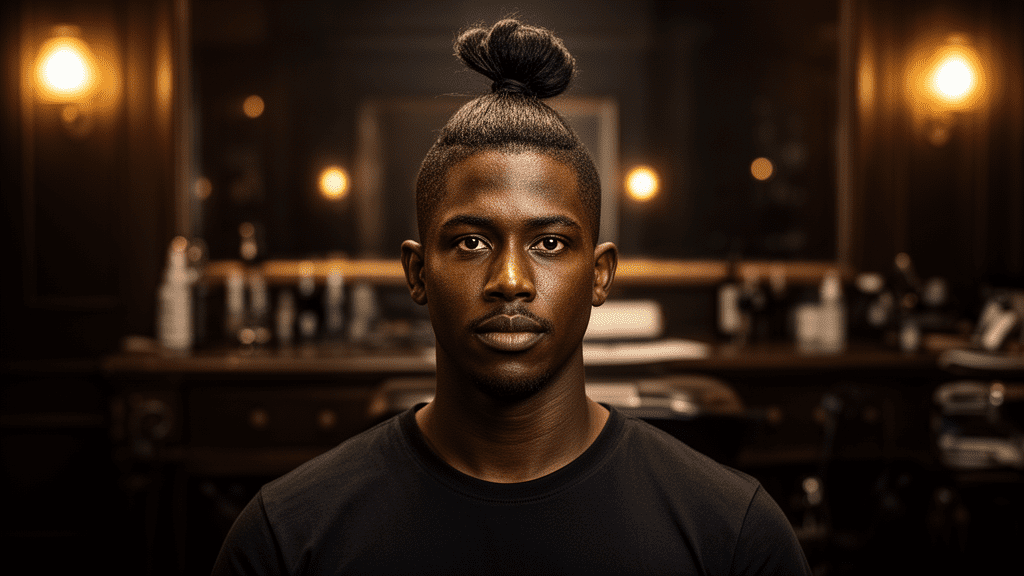
The traditional chonmage is characterized by two distinct features: a shaved pate (the sakayaki) on the crown of the head, and the remaining hair pulled back and tied into a prominent topknot. This topknot was not simply tied, but meticulously folded over itself, creating a distinctive loop or knot. The modern Samurai Bun, while inspired by this historical precedent, typically omits the sakayaki, opting instead for slicked-back hair on the sides and back, often contrasted with shaved or very short sides. This distinction is crucial; while a traditional chonmage includes the sakayaki, contemporary Samurai Buns generally do not, focusing on the gathered hair on top as the defining element.
Achieving the Samurai Bun
To achieve this distinct look, clear communication with your barber is essential. Requesting a “Samurai Bun” or “modern chonmage” helps convey the desired aesthetic, particularly emphasizing the absence of the sakayaki. Hair length on top is paramount, with a minimum of 6-8 inches typically required to form a substantial bun. Discuss whether you prefer shaved sides, a high fade, or a more subtle taper to complement the topknot. Visual references are highly beneficial for ensuring your barber understands your precise vision.
Variations of the Style
The Samurai Bun, like many classic styles, offers versatility through its adaptations:
- The Modern Samurai Bun: This is the most common interpretation, foregoing the sakayaki for slicked-back or clean sides. It provides a more contemporary and manageable option for daily wear.
- The Faded Samurai Bun: Incorporating a fade on the sides and back adds a sharper, more urban edge. The contrast between the closely cut sides and the gathered hair creates a bold statement.
- The Braided Samurai Bun: For individuals with longer hair, integrating a braid into the topknot adds texture and visual intrigue, elevating the style to a more intricate updo.
Suitability: Is the Samurai Bun for You?
This hairstyle is ideal for a bold, urban individual who desires a distinctive top style combined with the commitment to frequent barber visits to maintain the sharp look of the sides. The Samurai Bun makes a statement, suitable for confident personalities who appreciate standing out.
Hair Characteristics
- Hair Length: A minimum of 6-8 inches of hair on top is required to create a discernible bun. Longer hair offers more styling options for bun size and shape.
- Hair Type: Straight to wavy hair types are ideal for achieving the desired sleekness and control. Curly hair can also be styled into a Samurai Bun, though it may require additional effort to manage and create a sleek finish.
- Hair Texture: Medium to thick hair density typically holds the bun’s shape effectively. Finer hair may necessitate additional styling assistance to maintain volume and hold.
- Hair Health: Individuals with thinning hair on the crown might find the emphasis of a bun highlights this area. Careful styling and a barber’s advice can help in mitigating this.
Face Shape
Oval and square face shapes are particularly well-suited for the Samurai Bun, as the height of the bun can add balance and definition. Rounder faces can also wear this style, potentially benefiting from slightly more volume on the sides to create harmonious proportions.
Maintaining Your Samurai Bun
Consistent maintenance is key to preserving the integrity of the Samurai Bun. Regular trims every 4-6 weeks are recommended to keep the shaved or faded sides sharp and the overall silhouette refined. When washing, cleanse as needed, avoiding excessive frequency that can strip natural oils. For drying, blow-drying can assist in achieving a smoother finish, directing the hair back for the bun formation. While specific products are not detailed here, using appropriate styling aids is generally advised to ensure the hair remains slicked back and the bun holds its shape effectively.