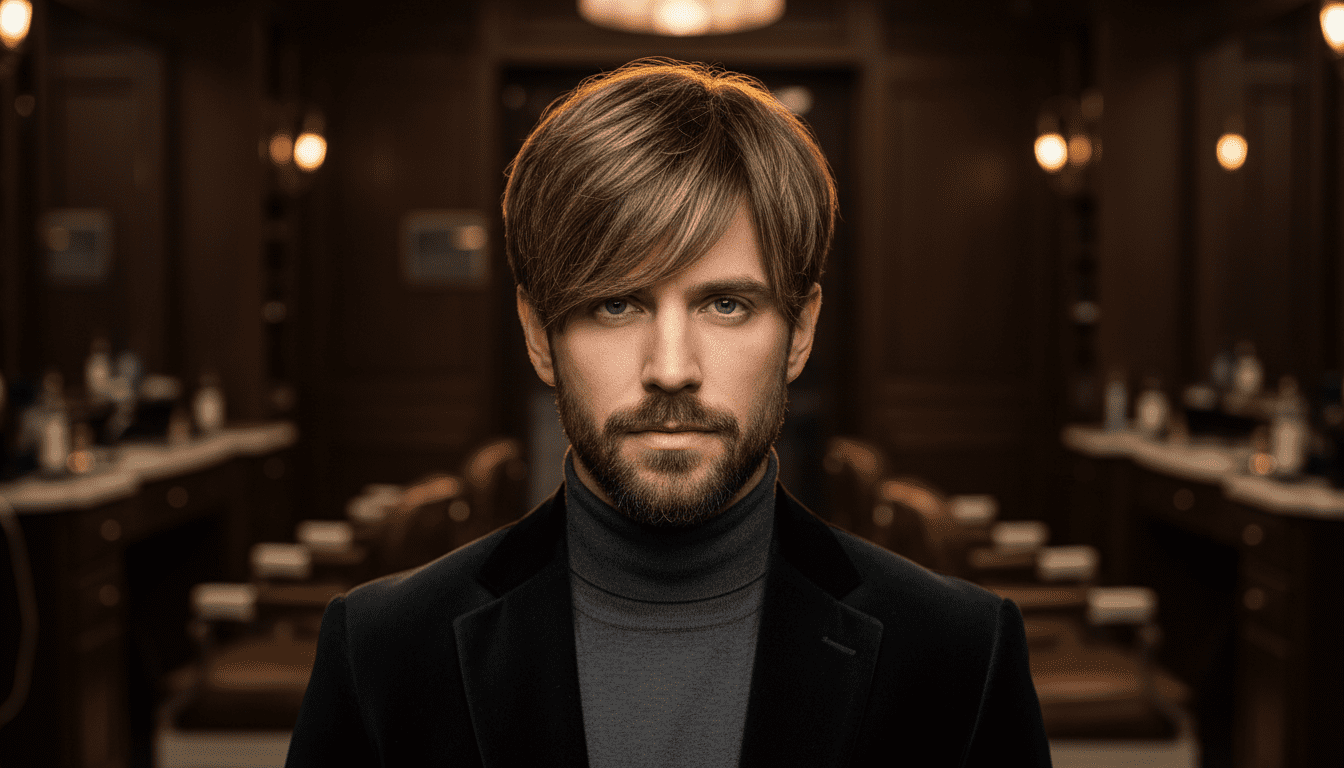

Introduction to the Skin Fade
The Skin Fade, also recognized as a Bald Fade or Zero Fade, stands as a hallmark of modern precision in men’s grooming. It is a haircut defined by an exceptionally clean and meticulous transition, where the hair on the sides and back of the head seamlessly diminishes to expose the bare skin. This style projects an aesthetic of confidence, order, and sharp attention to detail.
Its journey from a specialized military style to a global phenomenon highlights its adaptability and enduring appeal. The Skin Fade experienced a significant surge in popularity throughout the 21st century, profoundly influenced by evolving barbershop culture and the widespread reach of social media. It has become a defining aesthetic for individuals seeking a sophisticated yet edgy finish, representing a clean-cut modern sensibility that continues to dominate contemporary trends.
Understanding the Skin Fade
At its core, the Skin Fade involves a gradual reduction of hair length, culminating in a smooth, shaved finish at the perimeter of the hairline. This gradient effect, which can be likened to a visual spectrum, is achieved by barbers using clippers without guards or with extremely short guard lengths, creating a stark contrast with the longer hair on top. The precision required for this cut makes it a testament to a barber’s skill.
While the fundamental characteristic is the fade to skin, the precise point at which this transition begins can vary, offering distinct stylistic possibilities. This foundational technique allows for numerous adaptations, making the Skin Fade a versatile choice for a wide range of preferences and hair textures.
Historical Context and Evolution
The origins of the fade can be traced back to military haircuts, prized for their neatness and uniformity. Over time, these foundational short-back-and-sides styles were reinterpreted and refined within urban communities, particularly by barbers who began experimenting with more dramatic and artful transitions. This evolution, significantly influenced by hip-hop culture and the desire for distinctive, sharp looks, transformed the utilitarian military cut into the sophisticated and precise Skin Fade known today. It moved beyond functional necessity to become a significant stylistic statement.
Communicating Your Desired Skin Fade to Your Barber
Achieving the ideal Skin Fade requires clear communication with your barber. Precision in conveying your preferences ensures satisfaction with the outcome.
Begin by specifying the desired height of the fade. Options typically include a Low Fade, where the transition starts just above the ear; a Mid Fade, commencing around the middle of the head; or a High Fade, which begins closer to the crown. Additionally, discuss the length of the hair on top, providing an estimate in inches or using visual cues. You might also inquire about a Taper Fade, which offers a less drastic transition from the skin for a more understated effect. Visual references, such as photographs of preferred styles, are invaluable tools for clarifying your vision.
Variations of the Skin Fade
The Skin Fade serves as a canvas for numerous stylistic interpretations, allowing for personalization while maintaining its distinctive clean aesthetic. Common variations include:
- Drop Fade: In this style, the fade line curves downward behind the ear, creating a distinct, contoured effect.
- Burst Fade: Characterized by a semi-circular fade that radiates around the ear, often retaining more length at the nape.
- Taper Fade: A more subtle gradient than a traditional Skin Fade, it offers a refined transition without going completely to the skin.
- Skin Fade with a Hard Part: A shaved line introduces a sharp, geometric element to the hairstyle, delineating the top from the faded sides.
- Skin Fade with a Textured Top: This variation couples the clean fade with a top section styled for volume and movement, creating a contemporary contrast.
Suitability and Lifestyle Considerations
The Skin Fade is particularly suited for individuals who appreciate a pristine and meticulously maintained appearance. It is a choice that communicates deliberate style and attention to personal grooming. Given its high-contrast nature, the Skin Fade requires consistent maintenance to preserve its sharpness, aligning with a lifestyle that accommodates regular barber visits.
This haircut complements various face shapes; its sharp lines can enhance angular features, while a higher fade can introduce length and definition to rounder facial structures. It appeals to personalities who are confident, contemporary, and willing to make a sartorial statement through their hairstyle.
In terms of hair characteristics, the Skin Fade is adaptable across hair types including straight, wavy, and curly. The key lies in a barber’s expertise in working with individual hair textures to achieve a seamless blend. Hair density can also influence the outcome; skilled barbers can utilize the fade to create the illusion of fullness or to manage thicker hair effectively. It is advisable to maintain good scalp health, as this style exposes the scalp directly.
Essential Maintenance for the Skin Fade
Sustaining the immaculate appearance of a Skin Fade necessitates a commitment to consistent grooming and regular barber appointments. The defining feature of this cut is its sharp, clean transition, which begins to lose its crispness as hair naturally grows.
To keep the fade looking its best, a re-trim schedule of every two to four weeks is generally recommended, depending on individual hair growth rates. This regular maintenance ensures the integrity of the fade line and the overall sharpness of the style. Beyond trims, maintaining scalp hygiene is important, as the skin is more exposed. Appropriate styling products, such as matte clays or pomades, can be used to define and hold the longer hair on top, complementing the precise fade.
Celebrity Influence
The Skin Fade has been adopted by numerous public figures, solidifying its status as a prominent hairstyle in popular culture. Personalities such as Zayn Malik, known for his modern and evolving style, and Michael B. Jordan, who consistently showcases sharp, contemporary looks, have frequently sported variations of the Skin Fade. David Beckham, a perennial style icon, has also been seen with Skin Fade adaptations, often paired with a textured top. These examples underscore the haircut’s versatility and its appeal across diverse styles and industries.
Frequently Asked Questions about the Skin Fade
How short is a Skin Fade?
A Skin Fade reduces the hair on the sides and back of the head to the bare skin, typically achieved with a zero guard or a straight razor for the closest possible cut.
Is a Skin Fade the same as a bald fade?
Yes, ‘Skin Fade’ and ‘Bald Fade’ are terms used interchangeably to describe the same haircut, where the hair transitions down to the skin.
How often should I get a Skin Fade trimmed?
To maintain its sharp definition, a Skin Fade ideally requires trimming every two to four weeks, depending on the speed of your hair growth.
Can a Skin Fade be styled on curly hair?
Absolutely. A skilled barber can adeptly work with curly hair textures to craft a well-executed Skin Fade, often creating a striking contrast with the curls on top.
What is the difference between a high, mid, and low skin fade?
These terms denote the starting point of the fade line. A high fade begins near the crown, a mid fade around the temple area, and a low fade commences just above the ear.
The Enduring Appeal of the Skin Fade
The Skin Fade continues to be a highly sought-after hairstyle, valued for its precision, clean lines, and modern aesthetic. It is a testament to meticulous grooming and a discerning personal style. Whether one prefers a subtle transition or a dramatic contrast, the inherent versatility of the Skin Fade allows for a tailored expression of individual taste. Its enduring popularity underscores its position as a sophisticated and confident choice in contemporary men’s hairstyling.